In this guide 9 sections
- What is the AI action figure trend?
- How to do the ChatGPT action figure trend
- The action figure prompt we tested
- Same prompt, two models
- Where to run it free, and when paying makes sense
- How to make a 3D figure from a photo
- Can you get a real action figure of yourself printed?
- Is the trend over?
- Quick answers
The AI action figure trend turns your photo into a toy sealed in a blister pack with a printed backing card. We ran one prompt on two image models on 2026-10-21. Nano Banana Pro charged 2 credits and Seedream 5.0 Lite charged 1 credit, one try each. The trend peaked in the week of 2026-04-12 and is quiet now (status box at the top, Google Trends US, week of 2026-10-18, still running at fetch). The prompt below still rendered on both models in our run.
What is the AI action figure trend?
The trend, also called the ChatGPT doll or starter pack trend, asks an image model to render you as a collectible figure in a clear plastic pack. The pack carries a name header and a few accessories that stand for your job or hobbies. The result is a flat picture of a toy. It is not a 3D model or a physical object.
Google US results for “ai action figure” on 2026-10-20 showed an AI Overview that describes the same thing: a toy-style figurine inside custom blister-pack packaging. One of its cited sources is a Forbes explainer dated 2025-04-15 (forbes.com). So the format predates the wave we measured in April 2026.
How to do the ChatGPT action figure trend
You need a clear photo of yourself and an image model that accepts a reference photo. The prompt is in the next section.
- Pick a tool that edits from a photo. Free routes first: Gemini and ChatGPT both accept an uploaded photo with an image request. Their free limits are not verified as of 2026-10-21, and this prompt on either one is not tested.
- Upload a sharp photo with your face and outfit in view. Use your own photo or a fictional character. We do not publish steps for other people’s faces; see our content policy.
- Paste the prompt below with your details swapped in, then generate. Budget for a second try, because output varies between tries.
Kapwing’s guide to the related 3D figurine trend (kapwing.com, 2025-09-18) compares two reference photos. A selfie gave a distorted figure; a full-body photo gave a realistic one. We have not tested that comparison. It is a cheap thing to check on your second try.
The action figure prompt we tested (copy)
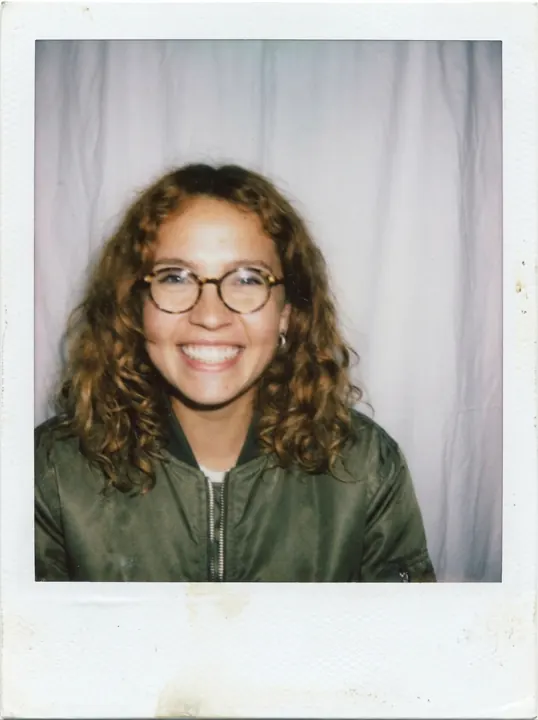
Our test used a reference photo of our fictional, AI-generated test character. The logged prompt, verbatim, was: “Turn the person in the reference photo into a collectible action figure sealed in a clear plastic blister pack on a cardboard backing card. The figure keeps her curly copper hair, round tortoiseshell glasses and olive bomber jacket. Accessories in the pack: a phone on a tiny tripod, a coffee cup, headphones. The card header reads CREATOR in bold retro toy lettering. Studio product photo, soft shadows.”
Here is the copyable version, with your own photo in place of the test character:
Turn me, from the photo I uploaded, into a collectible action figure sealed in a clear plastic blister pack on a cardboard backing card. The figure keeps my [hair], [glasses or other signature detail] and [outfit]. Accessories in the pack: [accessory 1], [accessory 2], [accessory 3]. The card header reads [ONE WORD] in bold retro toy lettering. Studio product photo, soft shadows.
Three choices carry the result. Name each accessory as its own item, because each one is a separate object the model has to draw. Keep the header to one short word: every extra letter on the toy box is one more the model can get wrong. In our run, both models spelled CREATOR correctly. List the details that must stay the same, so the model has fixed features to copy from your photo.
Do not paste a real toy brand or a licensed character line into the prompt. Brand names and distinctive packaging can be protected as trademarks, and an owner may object if you publish or sell a copy of its box. A generic “retro toy lettering” gets the look without that exposure. We name no brands as templates for that reason.
Same prompt, two models: what changed
On 2026-10-21 the same prompt cost 2 credits on Nano Banana Pro and 1 credit on Seedream 5.0 Lite (our charge, Higgsfield Plus account). Each model produced one charged image in one try, so this is a single sample, not a ranking. Our log marks the CREATOR header as correct on both images. It also marks all three accessories as present on Seedream 5.0 Lite; by eye, the Nano Banana Pro image has all three too. The same two models also ran a single-sample pair on the AI polaroid prompt.
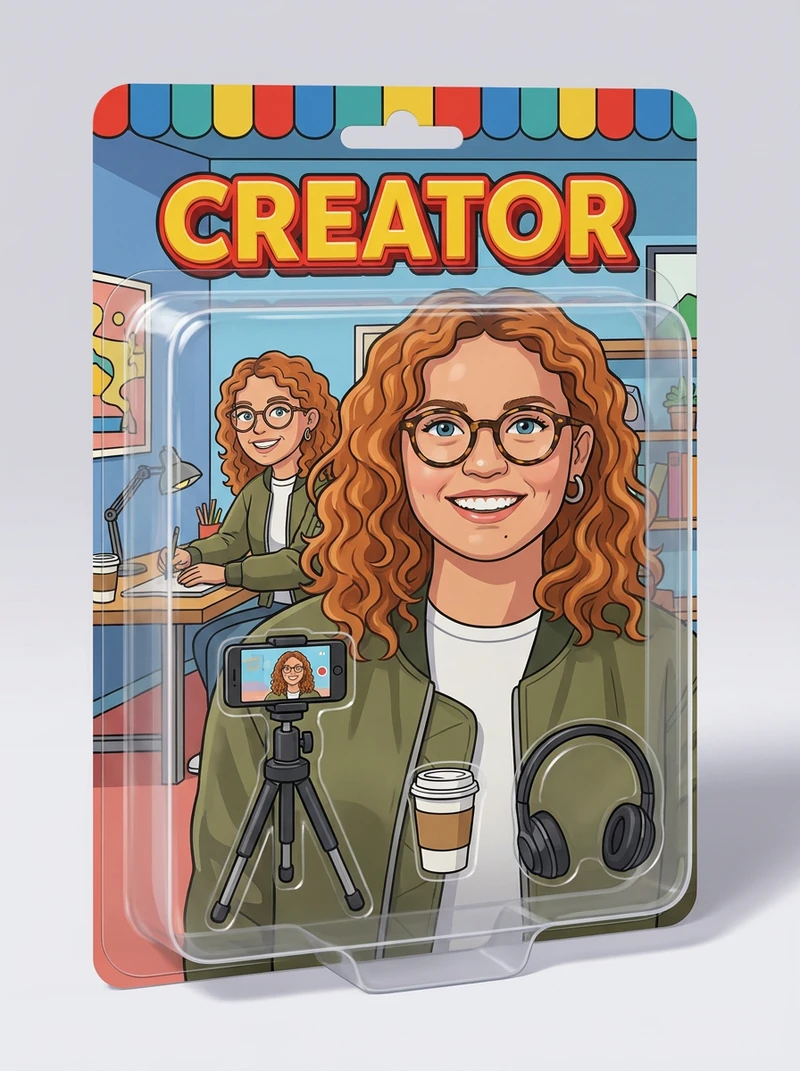
By eye, Nano Banana Pro drew the whole pack as an illustration. The figure is cartoon-style, and the card art behind it shows a second copy of the character at a desk. Seedream 5.0 Lite gave a more literal plastic-toy figure on a plain kraft-colored card.
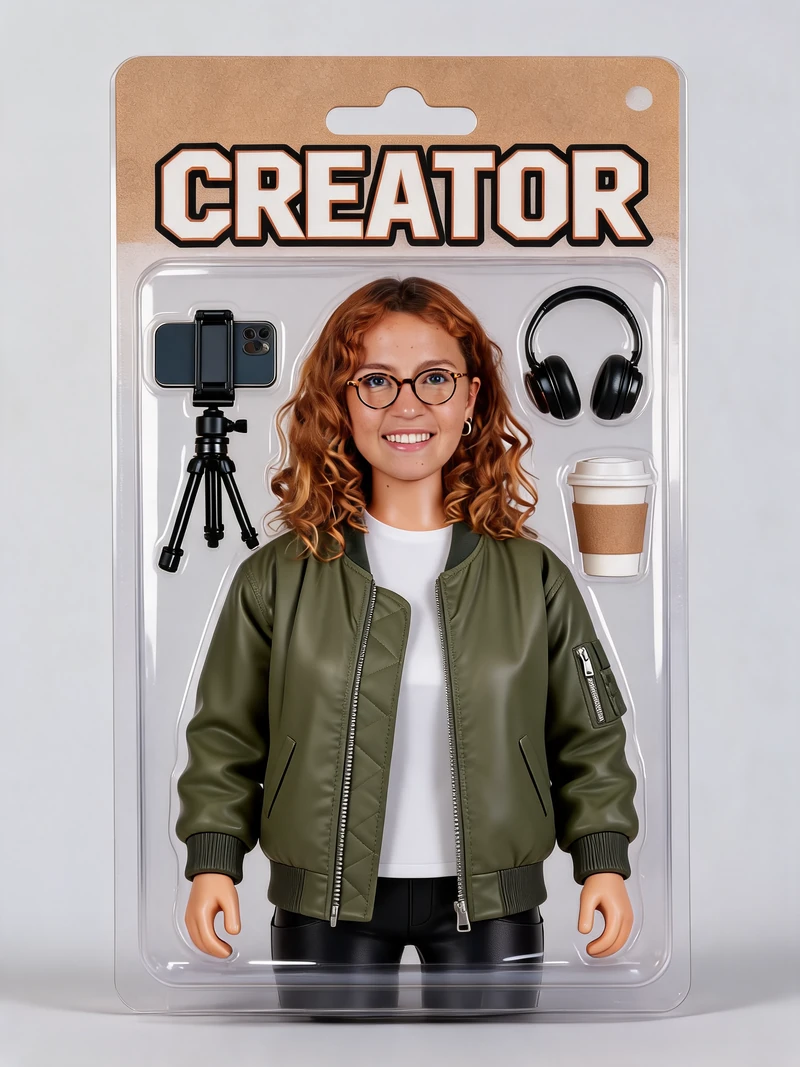
These are our observations, not a scored test. We did not measure likeness against the reference photo. One more record from the job log: every job we requested as Nano Banana Pro on 2026-10-21 came back labeled nano_banana_2. That held for 10 jobs out of 10 across that day’s tests, including this one. We report the record as it stands and draw no conclusion from it.
If you want an illustrated card, Nano Banana Pro gave it on this prompt for 2 credits. If you want a figure that looks like toy plastic, Seedream 5.0 Lite gave it for 1 credit. A second try costs the same again (our charge, 2026-10-21).
Where to run it free, and when paying makes sense
Free routes come first. Gemini and ChatGPT support photo-based image editing; their daily limits are not verified as of 2026-10-21. Dreamina says its action figure generator is free “with daily free credits” (dreamina.capcut.com, crawled 2026-10-20). The size of that daily allowance is not verified as of 2026-10-21.
Kapwing’s figurine guide says: “Tools like Kapwing and Seedream offer free tiers, though there may be limits on resolution, exports, or watermarks” (kapwing.com, 2025-09-18; the terms may have changed since). GoEnhance also lists an AI Action Figure effect in its site menu (goenhance.ai, crawled 2026-10-20). We have not opened that page, so its terms are not verified as of 2026-10-21.
Our tests ran on Higgsfield. We may earn a commission if you subscribe through the link below; it does not change what we test. Details are in our affiliate disclosure. Higgsfield has no trial (help center, fetched 2026-10-21); what its free tier covers is on the free tier page.
On higgsfield.ai, Image sits in the main menu and Nano Banana Pro is listed among the image models (crawled 2026-10-20). We ran our jobs through the Higgsfield MCP connection, so the web-app steps are not tested. In general: choose the model and add your photo as the reference, then paste the prompt. Recreate on Higgsfield (commission link). Credit prices are on the pricing page.
Paying makes sense when you want the same prompt on both models side by side, at 1 to 2 credits a try (our charge, 2026-10-21). For a single picture, start with a free route.
How to make a 3D figure from a photo
A “3D figure” in this trend is a picture that looks 3D. The prompt tells an image model to draw a figure in a pack, and the output is a flat PNG. Kapwing’s figurine guide (kapwing.com, 2025-09-18) uses the same method: a text prompt plus a reference image. Its prompt writes a realistic style and a scale such as 1/7 into the text. Neither that guide nor our test produces a mesh file.
To print 3D, you need a true 3D model from a separate image-to-3D tool that exports a mesh. Image-to-3D tools are not tested here. We name none and quote no prices.
Can you get a real action figure of yourself printed?
Yes in principle, but not from the blister-pack picture alone. A physical figure needs a 3D model, then a print or a custom-figure service. A flat render gives a service a design reference at best.
We have not tested any printing or custom-figure service. Their prices and turnaround are not verified as of 2026-10-21, and we list none. Your photo is personal data: read a service’s privacy terms before you upload it. Do not order a figure of someone who has not agreed. Keep trademarks out of anything you print or sell, for the reason given in the prompt section.
Is the trend over?
Yes for the April 2026 wave: in the week of 2026-10-18, searches for “ai action figure” stood at 3% of their peak. The radar data is Google Trends US for the 12 months to the week of 2026-10-18, with each curve scaled to its own peak. The peak came in the week of 2026-04-12. The curve stayed at or above 25% of that peak in 14 of 52 weeks. From the week of 2026-08-02 to the week of 2026-10-18 it ranged between 0% and 7% of peak. The same weekly data covers the other photo trends we track.
A low curve means few people search for the effect; it does not mean the prompt stopped working. If a new figure wave appears, we will add a dated section here instead of a new page. Other effects we track are in the AI effects library.
Quick answers
How to make the ChatGPT doll?
Upload a clear photo to an image tool and paste the prompt above with your details. ChatGPT and Gemini accept photo-based image requests; their free limits are not verified as of 2026-10-21. Budget for a second try.
How can I get an action figure made of myself?
The prompt gives you a picture. A physical figure needs a 3D model plus a print or custom-figure service. We have not tested any service, so we list no prices as of 2026-10-21.
What did the test cost?
Nano Banana Pro charged 2 credits and Seedream 5.0 Lite charged 1 credit, one try each, on 2026-10-21 (our charge, Higgsfield Plus account).